


CRM for Real Estate Agencies
Leads from property portals and advertising, listings, clients, viewings, deals, agent tasks, and sales pipeline management.
We will select the right solution, engagement model, and technologies for your goals and budget.
We will select technologies based on your goals, budget, and product growth plans.
Get a free consultation on the solution, timeline, and estimated budget.
Professional turnkey CRM system development. Design and creation of a custom CRM to automate your business: sales, marketing, and analytics. Individual approach, competitive pricing, and guaranteed results.
We develop CRM systems around specific business processes: for sales teams, service companies, B2B, eCommerce, learning platforms, and internal operations. We automate work with leads, customers, deals, tasks, and analytics, and integrate CRM with websites, ERP systems, telephony, email, payments, and other services. We also integrate AI features such as inquiry analysis, automated lead classification, sales assistant recommendations, response generation, communication summaries, and intelligent use of CRM data.

For more than 10 years, we have been developing CRM and internal business systems for companies with complex processes. Our experience includes 100+ digital projects, systems with large volumes of users and data, custom business logic, and high stability requirements. We work with CRM platforms that evolve over years and become a core part of day-to-day business operations.
Focus on your strategic priorities while we take full responsibility for managing the development process.
Before development starts, we agree on scope, estimates, and timelines. During the project, we provide regular updates on task status, actual time spent, and potential risks. A dedicated manager coordinates the team and keeps communication with the business clear. The client always knows what has been completed, what is in progress, and how the budget is being used.
Tell us which processes need to be automated, which systems you already use, and where your team spends the most time. We’ll propose a CRM structure, AI automation options, and provide an initial timeline and budget estimate.
Leads from property portals and advertising, listings, clients, viewings, deals, agent tasks, and sales pipeline management.
Leads from property portals and advertising, listings, clients, viewings, deals, agent tasks, and sales pipeline management.
Patients, appointments, doctors, reminders, interaction history, payments, communication, and integrations with internal medical systems.
Customers, orders, repeat sales, segmentation, support, marketing scenarios, and synchronization with the online store, ERP, and payment systems.
Requests, customers, service teams, work planning, statuses, documents, payments, and service delivery control.
Companies and contacts, long sales cycles, individual terms, commercial proposals, manager tasks, and ERP integrations.
Customers, transportation requests, routes, statuses, documents, rates, communication, and integration with internal operational systems.
Leads, students, course sales, communication, payments, repeat sales, manager workflows, and LMS integration.
Leads, clients, projects, tasks, budgets, communication, documents, and management of account and sales teams.
Customers, applications, contracts, statuses, documents, verification processes, communication, analytics, and complex data access rules.
Real projects for real businesses. We build solutions that deliver measurable results and help our clients reach new goals.
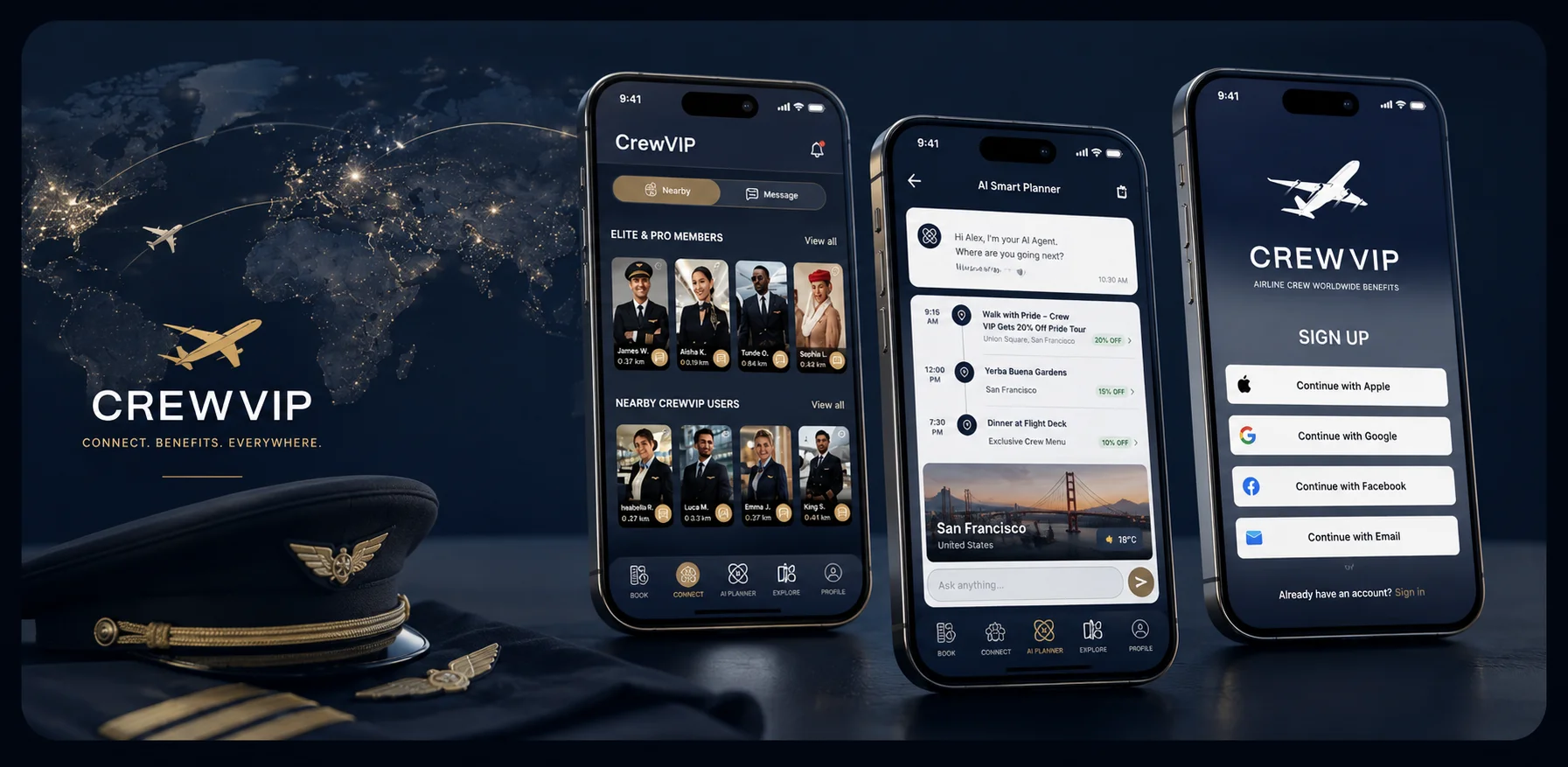
An international mobile platform for aviation professionals used by crew members from leading airlines worldwide, including Emirates, Lufthansa, Qantas, American Airlines, Etihad Airways, LATAM, airBaltic, and others. The platform combines exclusive offers, location-based services, professional networking, and AI features in a single application while remaining stable as its audience, geography, and functionality continue to grow.
«Intent Solutions develops and scales a global mobile platform used by aviation professionals from leading international airlines.»
— CrewVIP, international aviation platformLet’s discuss your goals, timeline, and budget and propose a solution tailored to your business.
Discuss Your Project →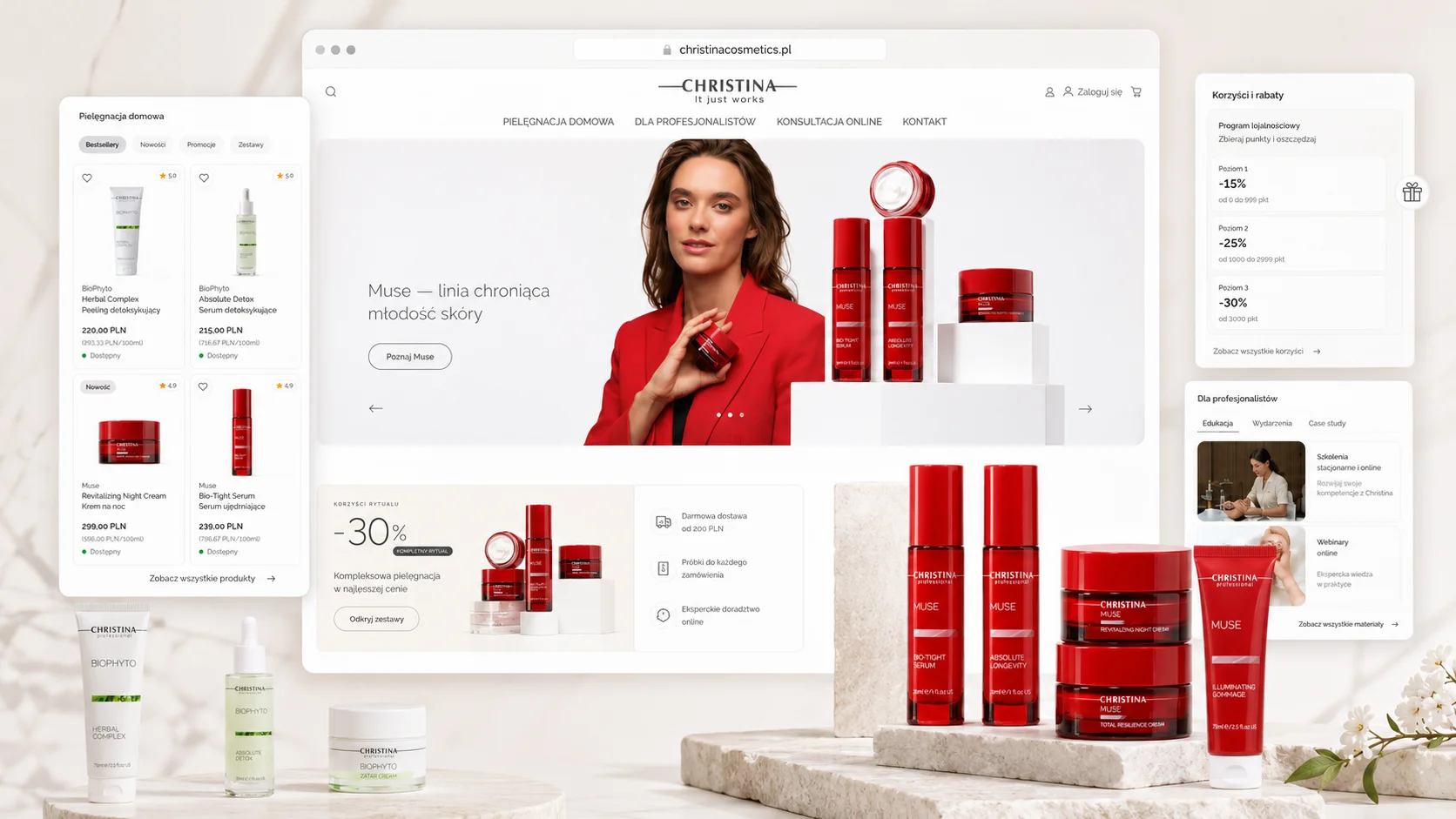
In 6 months, we launched an eCommerce platform to support the international cosmetics brand’s growth across Europe: a B2C store, a professional B2B area for cosmetologists, personalized pricing, and dedicated professional user flows.
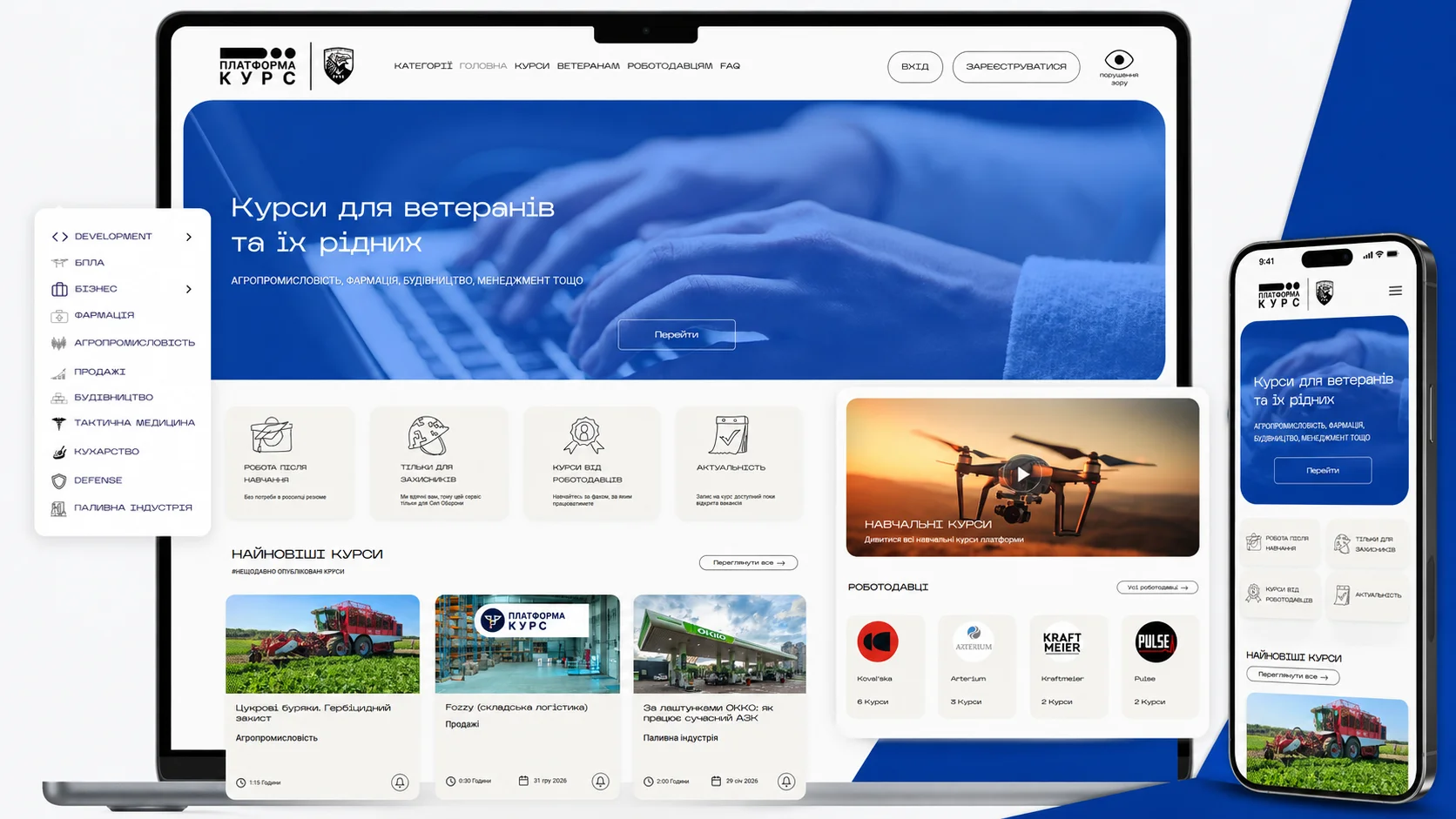
We developed and continue to support the «Kurs» platform, which connects veterans and employers within a single journey — from choosing a new career and completing training to testing, certification, and receiving interview invitations directly through the platform.
How Much Does Custom CRM Development Cost?
How Long Does Custom CRM Development Take?
When Does It Make Sense to Build a Custom CRM Instead of Using an Off-the-Shelf System?
Can AI Be Integrated into a CRM?
Do you work under a contract, and what guarantees do you provide?
Do You Provide a Warranty for Completed Work and Sign NDAs?
A modern CRM system is a flexible tool that adapts to a company’s needs and helps automate key business processes. Below are eight core features that can be implemented during turnkey CRM development:
Client Management
Sales Automation
Marketing and Email Campaigns
Analytics and Reporting
Integration with IP Telephony
Модуль HR и управление персоналом
API for External Integrations
Customer Support (Helpdesk / Service Desk)
Send us a request — we will contact you within 1 hour and suggest the next steps.
Unlike ready-made boxed solutions, developing a custom CRM system allows you to take into account all the specific features of your business processes, integrate the necessary modules, and ensure maximum operational flexibility. It’s not just a program for managing a client database — it’s a comprehensive tool that unites sales, marketing, analytics, and service management within a single digital environment.
By choosing turnkey CRM development, you gain not just a software product but also a competitive advantage. Such a system fully aligns with your business objectives and easily scales together with your company’s growth. The key benefits of a custom approach include:
Flexibility: the system is designed around your actual processes, not the other way around.
Integration: the ability to connect CRM with ERP, telephony, websites, accounting, or warehouse systems.
Security: data is stored on your own servers with customizable access rights.
Scalability: new features can be added without completely rebuilding the system.
Unique interface: a convenient structure tailored to employees’ needs.
This type of turnkey CRM development ensures full compliance with business requirements and significantly increases team efficiency.
Every project starts with analytics — the foundation of quality CRM design. After analyzing business processes, goals and logic for the future solution are defined. The main stages include:
Analytics and technical specification: defining the CRM structure, user roles, and business logic.
Design and UX: creating a user-friendly interface that ensures comfortable work for employees.
Programming: developing modules for sales, analytics, reporting, and client communications.
Integration: connecting external services such as telephony, email, messengers, and accounting systems.
Testing and implementation: verifying functionality, training staff, and launching the system into operation.
Each stage is coordinated with the client, ensuring clear alignment with expectations and minimizing risks. This approach is especially crucial when developing a custom CRM system with unique business logic.
The cost of development depends on the project’s scale and the complexity of its functionality. Custom CRM development takes into account several key factors:
number of modules and features;
availability of integrations (1C, IP telephony, ERP);
type of interface — web or mobile;
level of data security;
scope of post-launch technical support.
However, the main advantage lies in long-term value — the system quickly pays for itself through process optimization and increased business profitability.
An effective CRM system is an investment in your company’s growth. We’ll help you create a solution that automates sales, improves customer interaction, and increases profitability. Submit a request — and our experts will develop the optimal CRM strategy tailored specifically to your business.

Intent Solutions develops reliable digital products for companies of all sizes — from corporate websites and eCommerce platforms to mobile applications and custom business systems.
We combine technical expertise, a deep understanding of business processes, and transparent project management to ensure that every solution delivers measurable results.
Our team supports your project at every stage — from requirements analysis and architecture design to development, testing, and ongoing support. This approach allows us to anticipate risks, optimise costs, and bring products to market faster while maintaining high code quality and architectural flexibility for future growth.
We work with eCommerce, fintech, healthcare, and enterprise companies, adapting the technology stack to the specific needs of each business rather than forcing the business to adapt to the technology. Every project begins with a detailed requirements analysis, followed by an architecture designed to support increasing workloads and growing user numbers.
Over more than 13 years, we have delivered dozens of projects of varying scale — from MVPs for startups to large enterprise systems with strict security, availability, and reliability requirements. Our approach is built on transparent communication, clear deadlines, and measurable results at every stage of the partnership.
We invest in our team’s development and keep up with the latest technologies to provide solutions that remain effective in the long term rather than simply addressing an immediate need. We regularly conduct code reviews, implement automated testing, and keep documentation up to date, ensuring that project handovers and team scaling can take place without compromising quality.
Creating digital products for businesses since 2013.
Web, eCommerce, mobile, and custom software solutions.
You can track tasks, deadlines, time spent, budget, and overall progress.
We support, improve, and scale products after launch.
No lengthy approval processes or complicated procedures — it takes only a few days from your first message to the project launch.
Tell us briefly about your project — we will respond within one business hour.
Get a free consultation with an IT expert to assess the scope, timeline, and budget.
We assemble a team tailored to your project and begin work within just a few days.


